Range is the base our whole line is built on. Every bird on this page is a Range bird. What changes between them is which extra traits they carry. That makes this group the clearest way we have to show how quail color actually works.
Nine Range birds. They differ from one another in only two ways, which is exactly what makes them a good teaching set.
Tap any bird for its full record, photographs, and what it would bring to a breeding pen. Five of the nine were shown at the Boulder County Fair in August and carry their placing in the corner of the photograph; the rest stayed home and are marked as such.
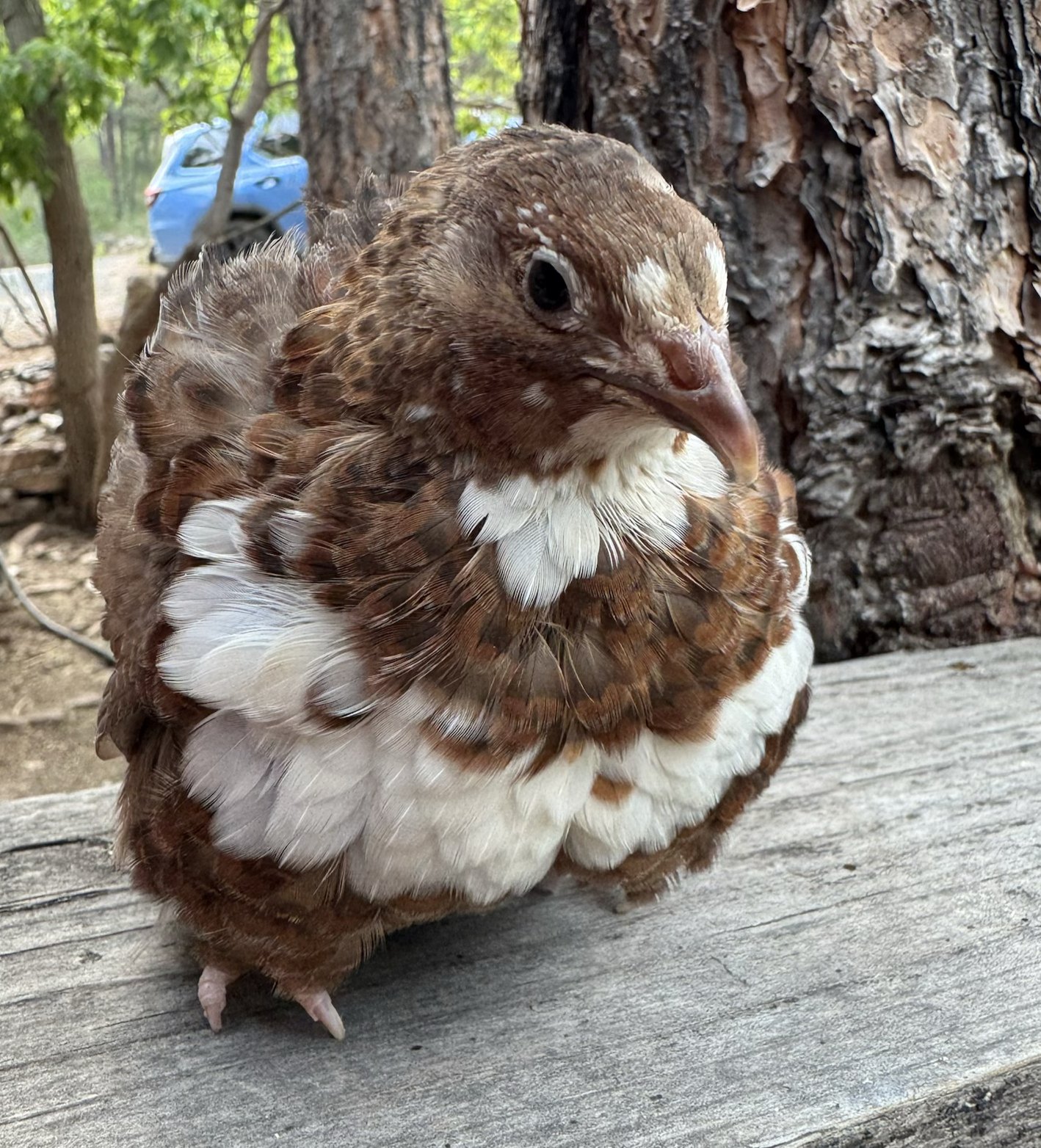
Rosie
Range · female · 230 g (8.1 oz)
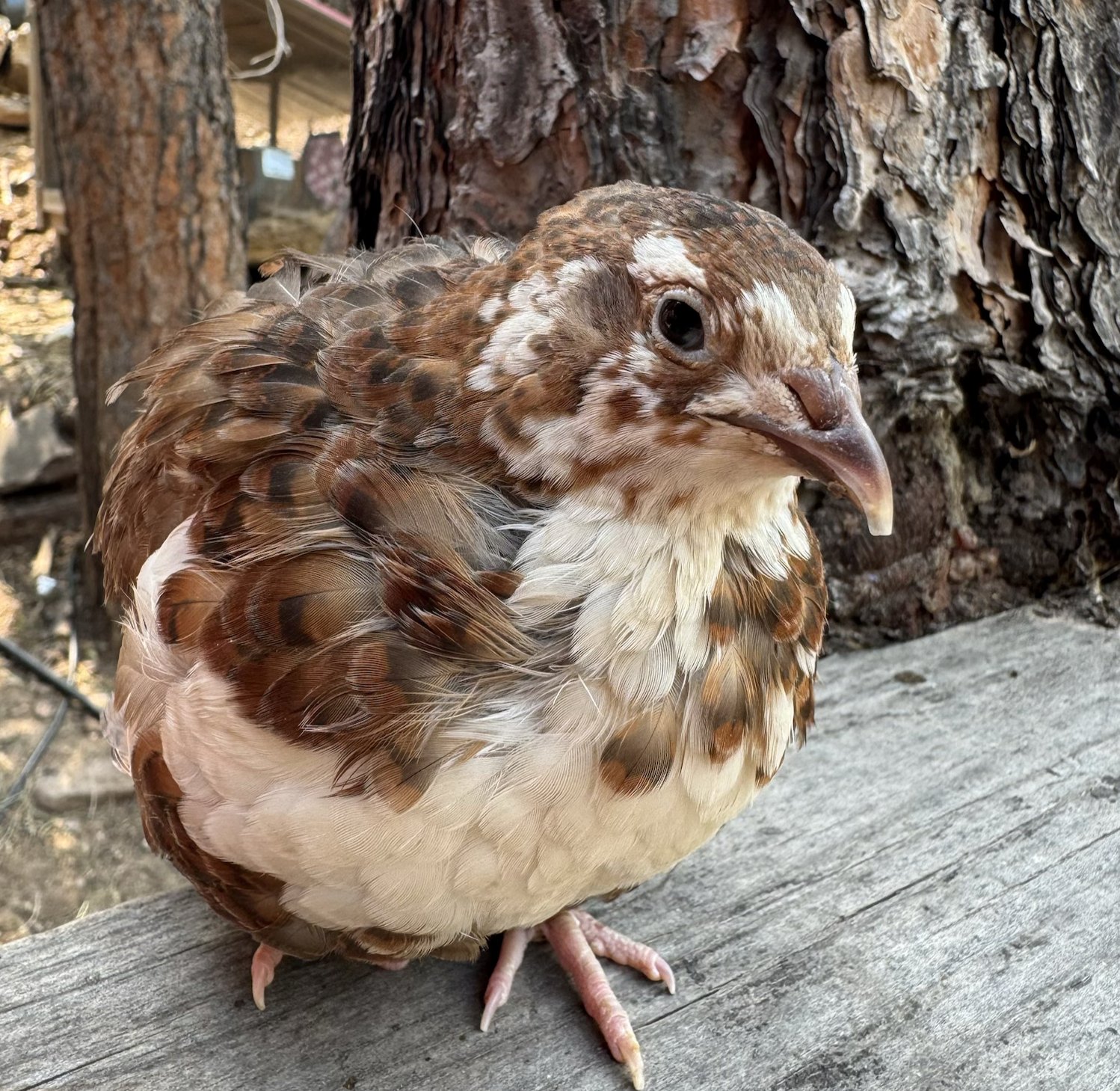
Arwen
Range · female · 224 g (7.9 oz)
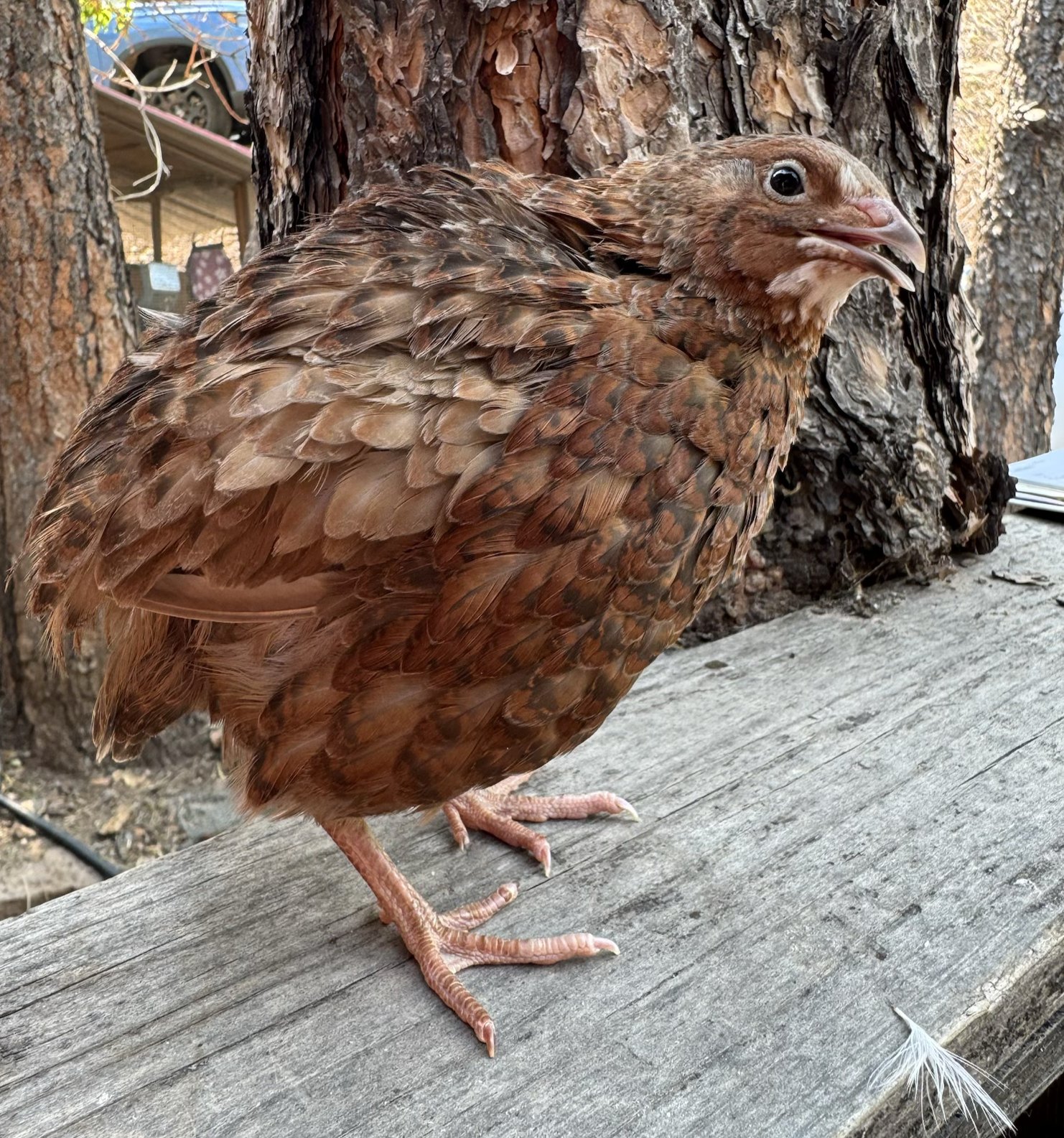
Eowyn
Range · female · 269 g (9.5 oz)
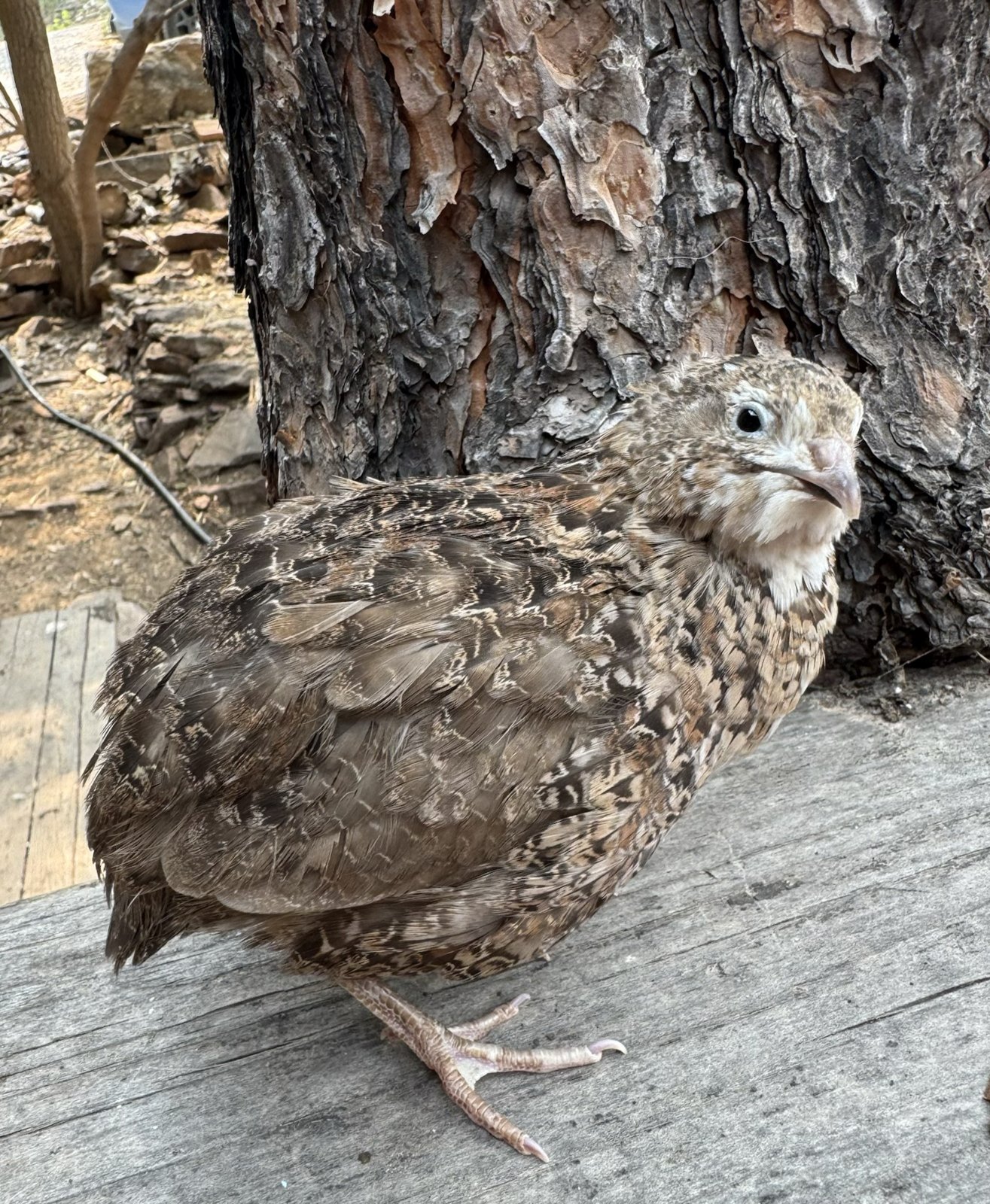
Faramir
Range · male · 96 g (3.4 oz)
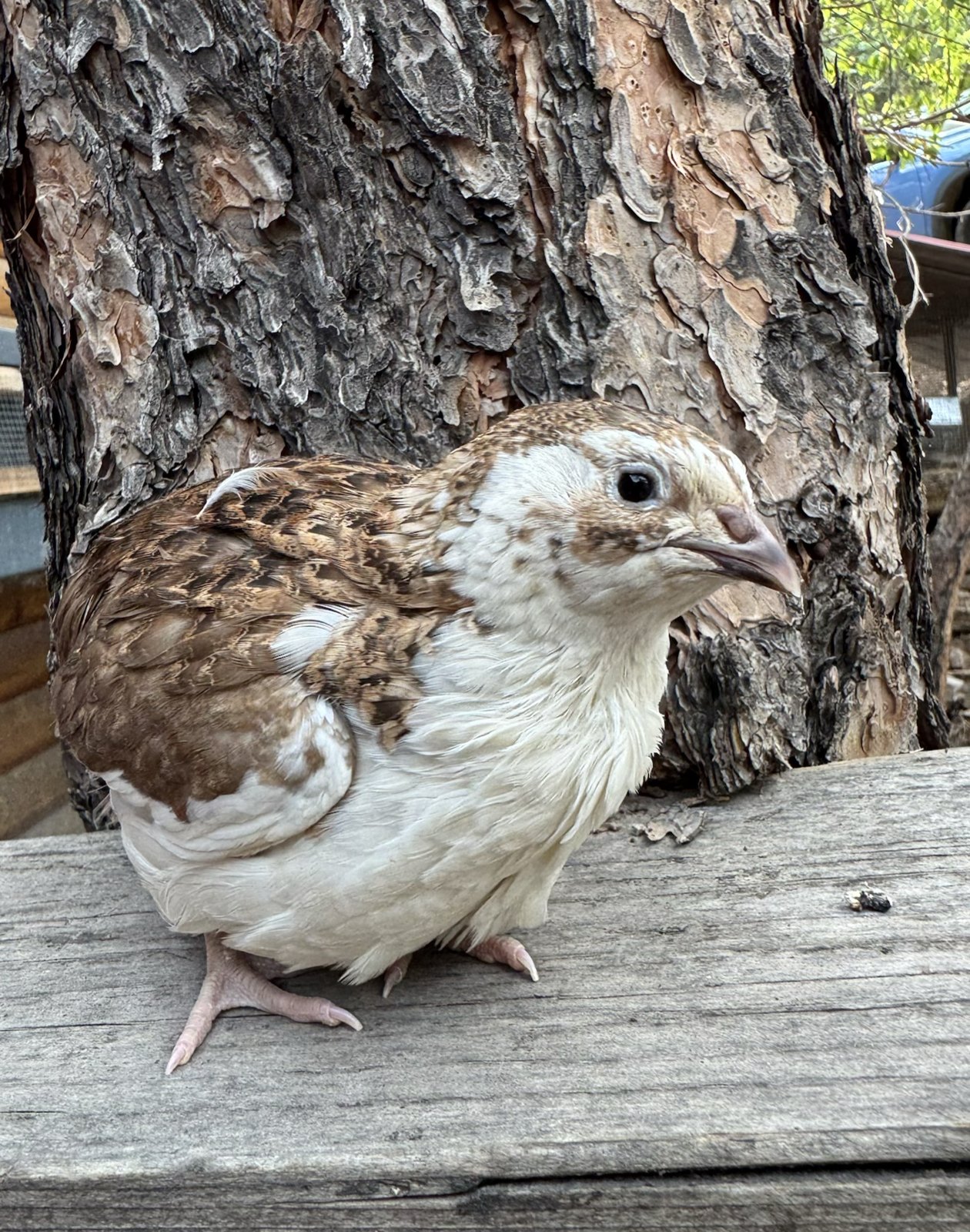
Legolas
Range · male · 198 g (7.0 oz)
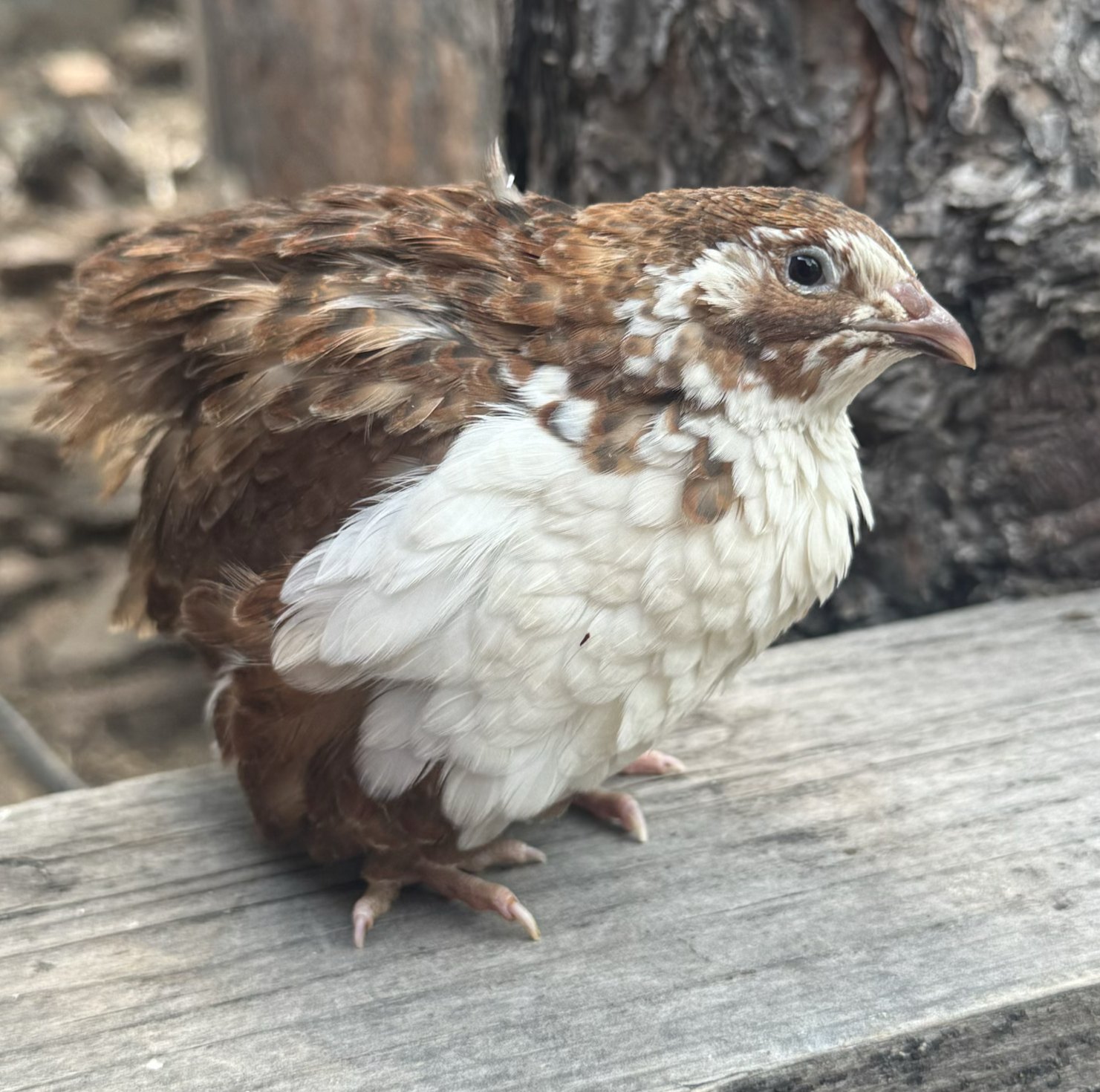
Gimli
Range · male · 207 g (7.3 oz)
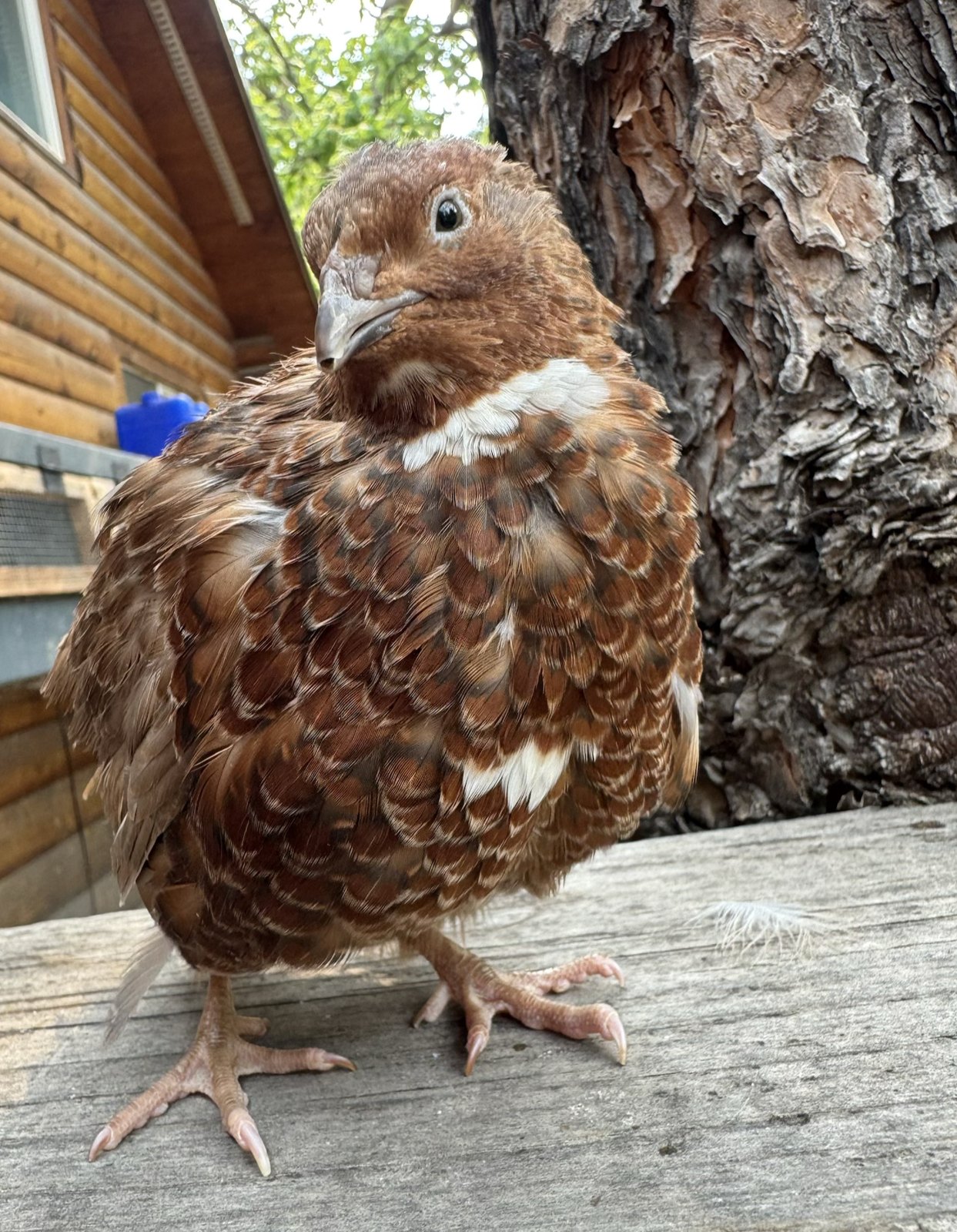
Aragorn
Range · male · 187 g (6.6 oz)
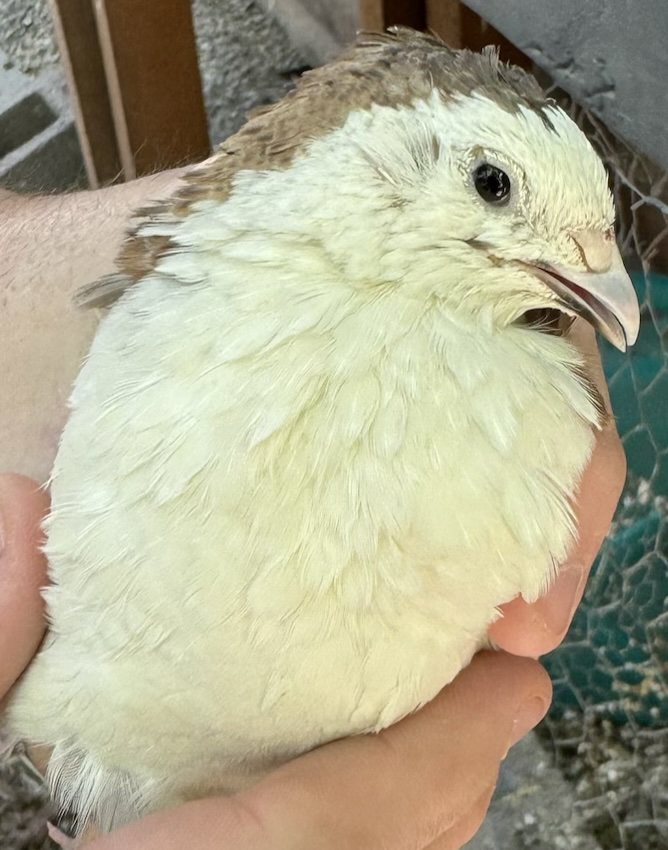
Samwise
Range · male · 179 g (6.3 oz)
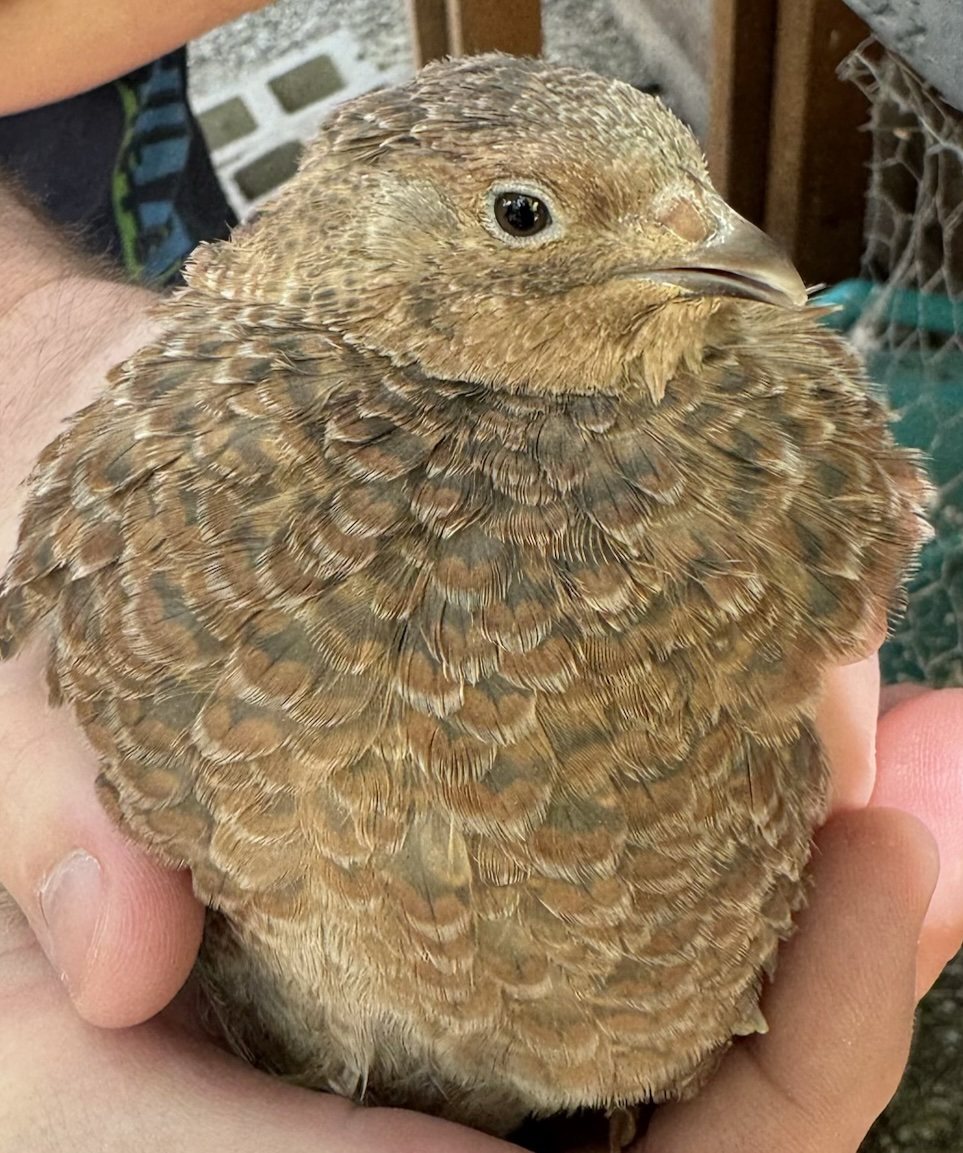
Galadriel
Range · female · 221 g (7.8 oz)
All nine birds as a table. A question mark means we have not confirmed the trait.
| Name | Pen ID | Sex | Tuxedo | Fee | Weight |
|---|---|---|---|---|---|
| Rosie | Range 1 | female | ✓ | – | 230 g (8.1 oz) |
| Arwen | Range 2 | female | ✓ | – | 224 g (7.9 oz) |
| Eowyn Not at the fair | Range 3 | female | bib | – | 269 g (9.5 oz) |
| Faramir | Range 4 | male | ✓ | ✓ | 96 g (3.4 oz) |
| Legolas | Range 5 | male | ✓ | ✓ | 198 g (7.0 oz) |
| Gimli | Range 6 | male | ✓ | – | 207 g (7.3 oz) |
| Aragorn Not at the fair | Range 7 | male | ✓ | – | 187 g (6.6 oz) |
| Samwise Not at the fair | Range 8 | male | ✓ | – | 179 g (6.3 oz) |
| Galadriel Not at the fair | Range 9 | female | – | – | 221 g (7.8 oz) |
Weights recorded 3 August 2026 on a digital kitchen scale. Sex determined by vent examination, not by plumage. Range birds are not feather-sexable.
Every gene and every breeder term behind these birds now lives on one page, with the published sources separated from the breeder convention and worked examples photographed from our own birds. It used to be repeated here and there, which meant it could drift out of step with itself.
Every quail here has eaten 100% certified organic feed for its entire life. Our quail hatch here and go straight onto a certified organic chick starter, then onto an organic grower ration once they are grown. Not one of them has ever eaten conventional feed. It costs us noticeably more and we think it shows, in the birds and in the eggs.
Five of our nine Range birds were shown in August and every one of them placed: three blues, one red and one white. The rosette in the corner of each photograph above is that bird's own result.
They are jumbo-line breeding birds, not market birds, and every one of them has been handled almost daily since hatch, so they are steady to pick up rather than wild. If you are starting or refreshing a Coturnix line, email us and we will tell you what is still here and what each bird carries, including what we have not been able to confirm.
See the fair results Order hatching eggs & chicks