Gradient tones of gray, black and white, with a light face and dark speckling down the breast. The palest of the varieties we keep.
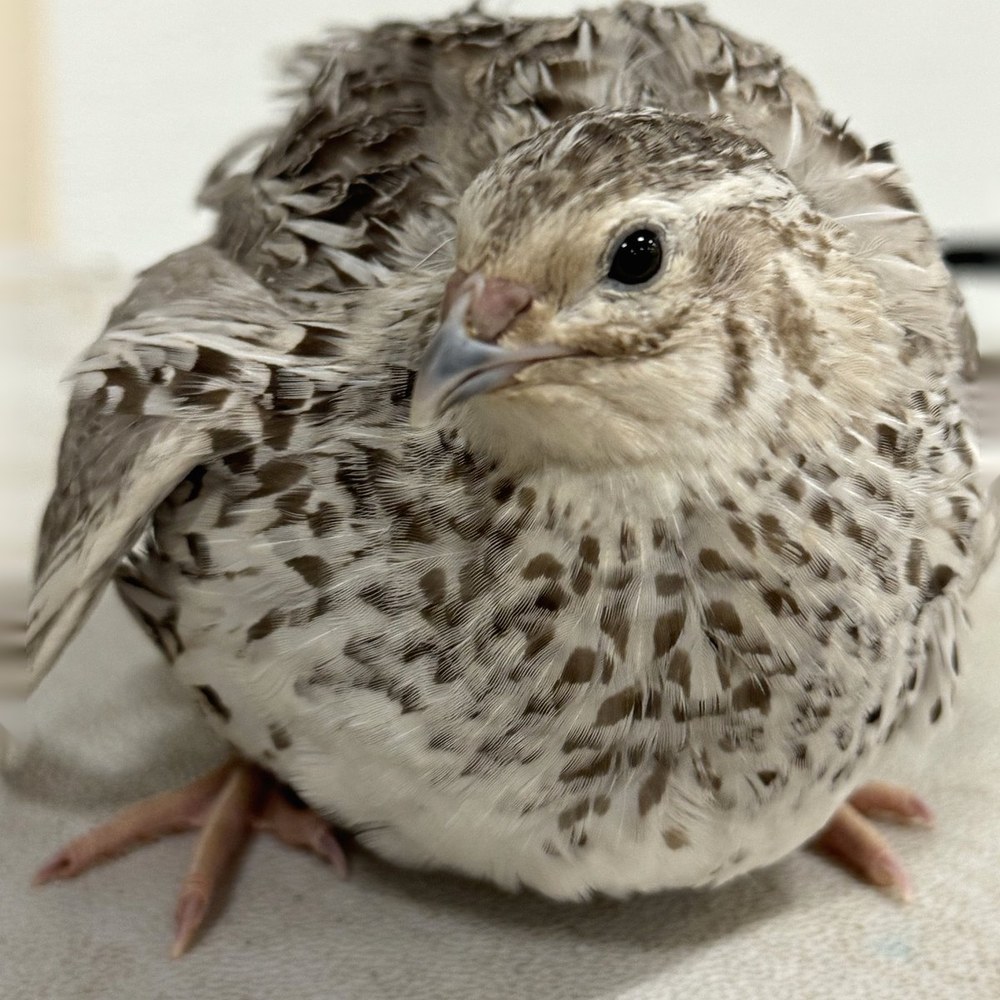
Our own bird, photographed at home this summer.
Gray, black and white running as a gradient rather than as blocks of color, with dark speckling scattered down the breast and a noticeably light face. Against an Autumn Amber or a German Pansy in the same pen the difference reads instantly: there is almost no warm tone left in an Egyptian Fee.
Cream shells with brown speckling. These are not blue eggs. If a blue egg is what you are after, that is the Range Celadon pen.
Every quail here has eaten 100% certified organic feed for its entire life. Our quail hatch here and go straight onto a certified organic chick starter, then onto an organic grower ration once they are grown. Not one of them has ever eaten conventional feed. It costs us noticeably more and we think it shows, in the birds and in the eggs.
| Item | Price |
|---|---|
| Hatching eggs, Egyptian Fee Kept separate and sold as this variety. Collected fresh, never washed. | $18 / dz $27 / 18 eggs |
| Day-old chicks, straight run Go home at one to three days old. We hatch to order, not to stock, so reserve ahead. | $6 ea |
| Chicks, one to three weeks Grown on by us through the fragile stage, eating and drinking on their own. | $8 ea |
Chicks are sold straight run. We cannot promise a particular bird or a particular marking from a particular hatch, and we will not pretend otherwise. Local pickup only, at the Boulder County Fairgrounds or at Natural Grocers on North Main Street in Longmont.
Four varieties in the pens. Range Celadon is the blue-egg line and the only one with pages for individual birds.